EN
USD
Your deck is sleeved. Your deck box is packed. Then someone asks whether you brought the tokens.
Somewhere in your bag, probably.
MTG accessories have a way of becoming a second collection: token cards, dice, counters, and the occasional marker you cannot quite remember keeping. Without a simple system, finding the right piece can take longer than finding your opening hand.
The easiest way to store MTG tokens and counters is to keep the pieces your deck uses together, separate loose accessories from cards, and leave the rest in an organized collection at home.
Here is a practical way to set that up.
Start with the deck you actually play.
Look through its cards and make a short list of the tokens it can create. Gather the relevant token cards into a small packet instead of bringing your entire token collection to every game.
Sort by what the token represents, rather than by the set it came from. If two tokens share a creature type but have different characteristics, keep them distinguishable.
Your packet might include:
The goal is not to carry every possibility. It is to make your usual game actions easy to represent.
A useful habit: whenever you change your deck, check its token packet too. A new card may need a token your old setup did not include.
Token cards can travel with your deck without being mixed into it.
Use a clearly labeled divider or a separate card-sized compartment. Different sleeve backs can also make your token packet easier to identify while packing up.
Before putting everything into one box, check the fit with your actual sleeves and accessories. A box that comfortably holds your deck may not have enough spare space for a thick token packet.
The lid should close normally. You should also be able to remove the cards without pulling hard or bending their edges.
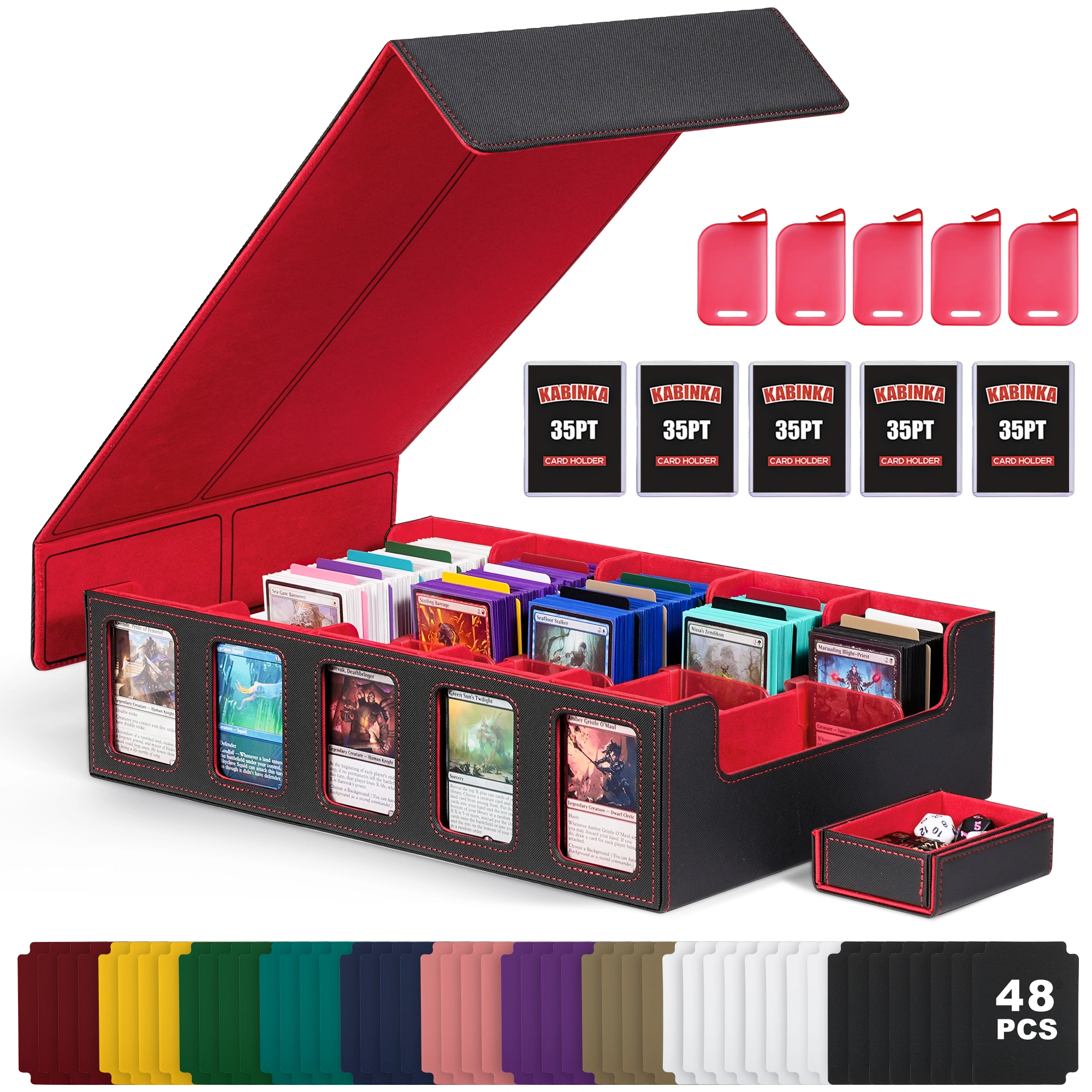
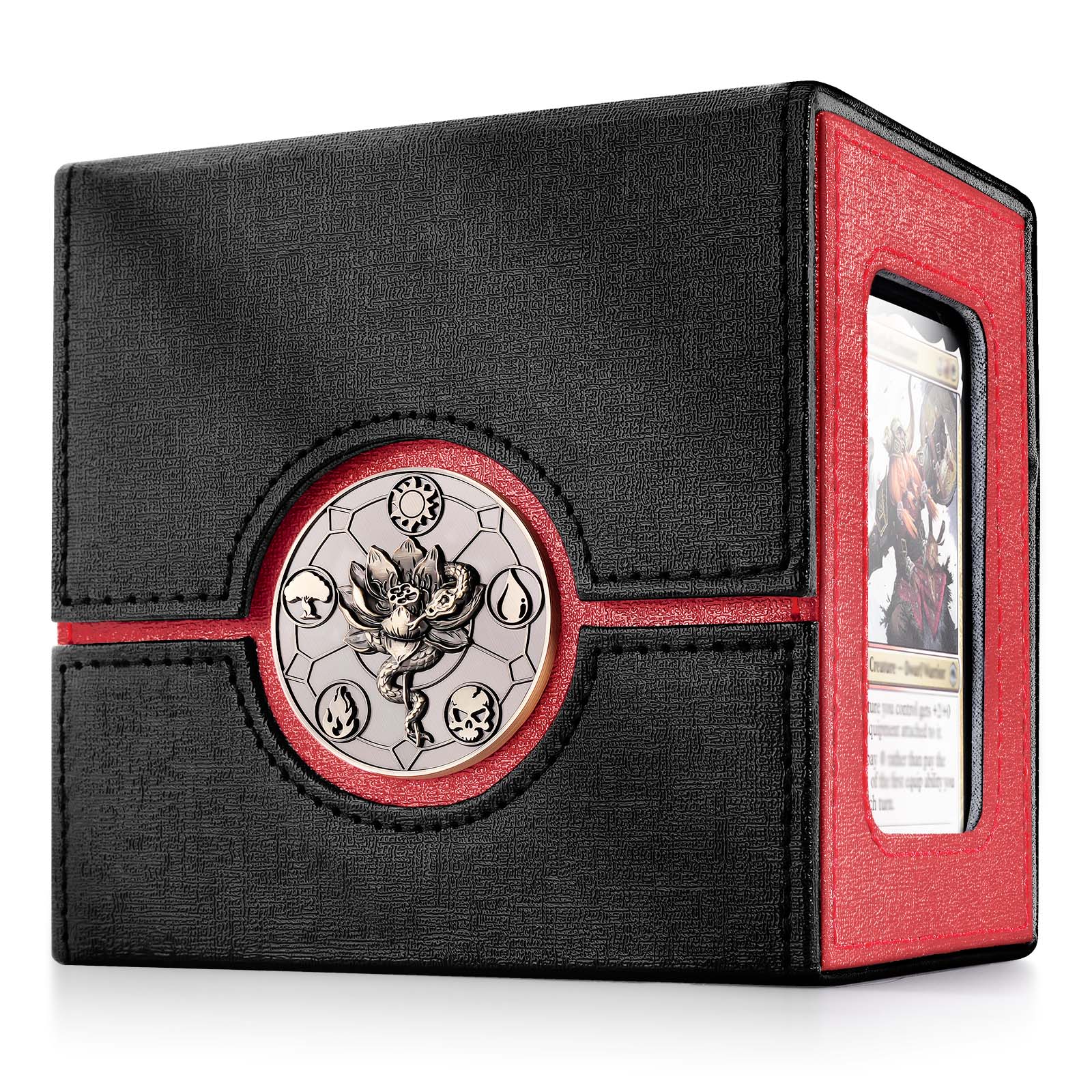
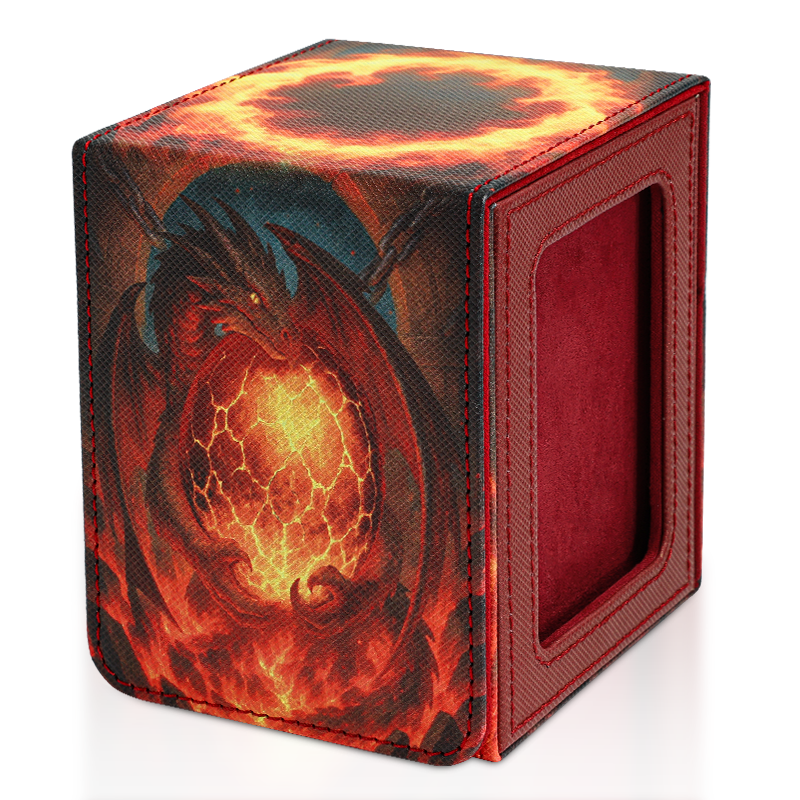
If the fit is tight, give your tokens a separate home. Browse Kabinka deck boxes and compare the listed dimensions and compartment layouts with the setup you plan to carry.
Loose dice do not belong between your cards.
Keep physical counters and dice in a small closing container, pouch, or dedicated accessory tray. This makes them easier to find and keeps hard objects from moving against card surfaces during travel.
Separate pieces by purpose when it helps:
At the table, make it clear what each marker represents. Using the same-looking die for several different purposes can make the game state harder to follow.
You do not need a large assortment just because you own one. Pack the pieces you use, with a few practical spares.
Your collection and your travel kit have different jobs.
At home, you want to find any token you own. At game night, you want to find the token your deck needs right now.
A simple two-location system works well:
| Keep with your deck | Keep in your home collection |
|---|---|
| Frequently used token cards | Tokens for decks you are not bringing |
| A small set of useful dice | Extra dice and duplicate accessories |
| Relevant counter markers | Less frequently used markers |
| A few flexible spare markers | Collectible or spare token cards |
For the home collection, use labeled sections that make sense to you. Creature tokens, artifact tokens, and miscellaneous markers can be a useful starting point.
Avoid creating so many categories that putting everything away becomes a chore.
If you usually bring one deck, one token packet and one small accessory container may be enough.
If you bring several decks, decide which accessories should stay with each deck and which can be shared.
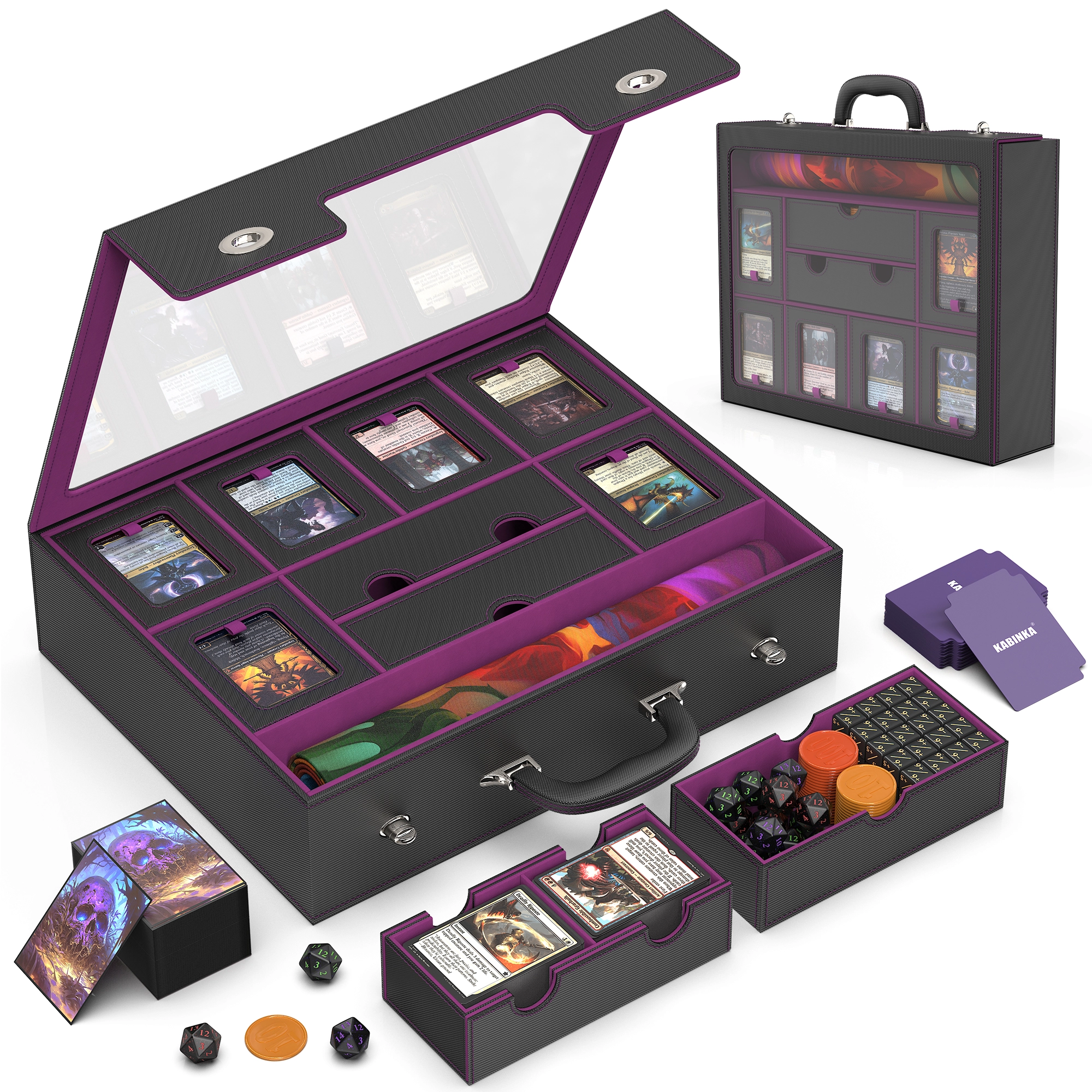
Keep deck-specific token cards beside their matching deck. A shared dice container can stay in a central accessory compartment.
A small label can save a surprising amount of searching. “Tokens — Goblins” is more useful than an unlabeled stack at the bottom of a bag.
For a setup that carries several decks and accessories together, explore Kabinka modular deck boxes. Check the individual model’s layout before choosing where each token packet and accessory container will go.
The easiest time to prevent tomorrow’s missing-token problem is at the end of today’s game.
Before packing up:
This small routine keeps your storage system useful between games—not just on the day you organize it.
Sleeves can help protect frequently handled token cards and make a packet easier to recognize. If you sleeve them, include that extra thickness when checking your storage capacity.
Yes, provided there is enough room and a clear way to keep them separate. If closing the box puts pressure on the contents, use another compartment or a separate container.
Start with the ones your decks need. A few flexible markers can be useful, but bringing your entire collection often creates more sorting than convenience.
A separate token packet, a small closing container for dice and counters, and a clearly assigned place for both in your bag.
A good storage setup makes the next game easier to start.
Keep your deck’s tokens close, your loose accessories contained, and your spare collection organized at home. Then you can spend less time searching through your bag and more time playing.
Ready to organize your next game-night kit? Explore Kabinka’s deck box collection and choose a layout that suits your cards and the accessories you actually carry.
Copyright Shenzhen Rushidao Technology Co., Ltd. All Rights Reserved. POWERED BY UEESHOP


