EN
USD
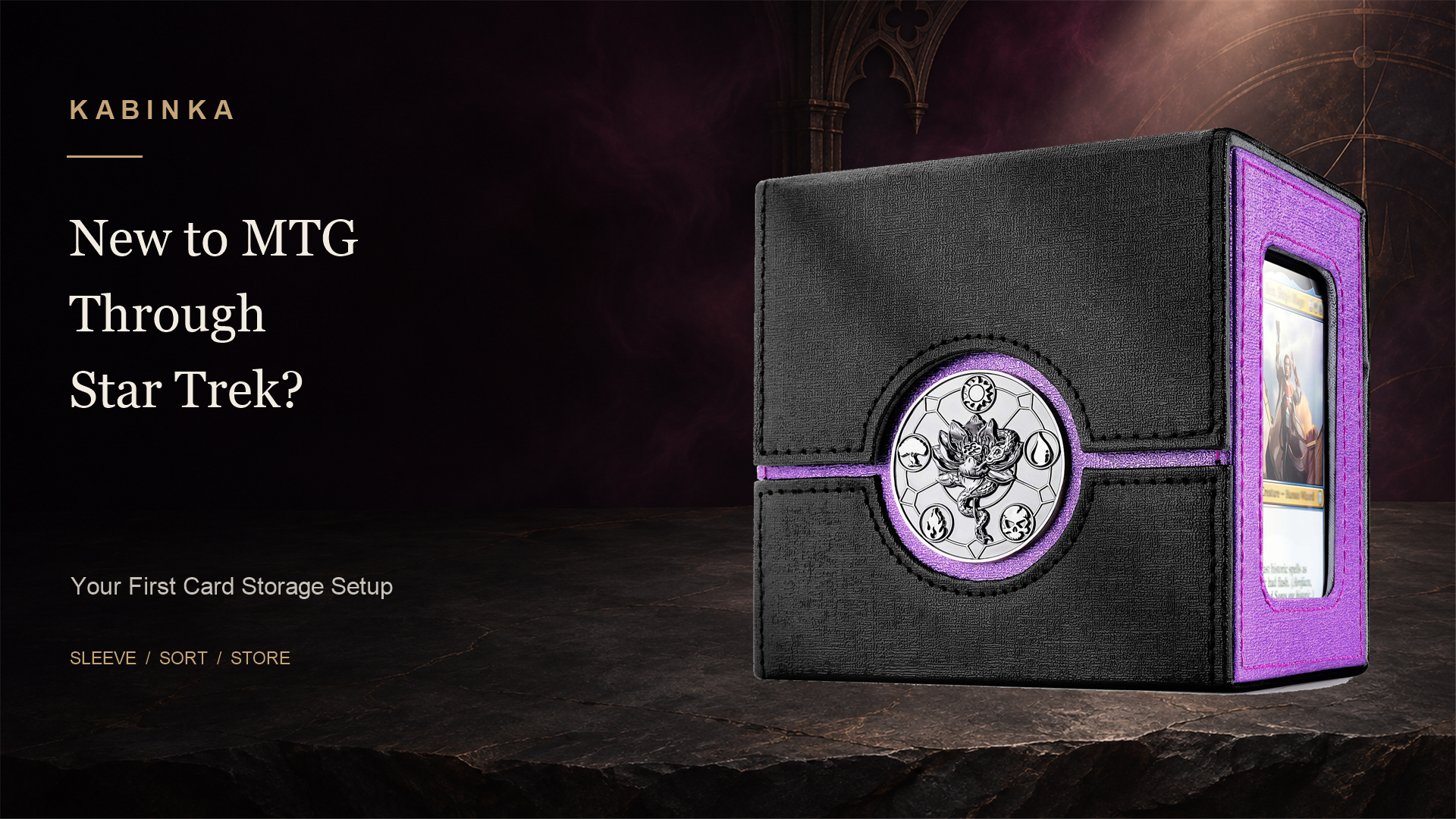
You came for the captains, starships, and familiar characters. Now you have a growing stack of Magic cards—and a new question: where does everything go?
You do not need a fully equipped collector’s room to get started. A few well-chosen essentials can keep your first deck ready to play and your favorite cards easy to find.
Start with sleeves for the cards you play, a box that fits your sleeved deck, and a separate place for cards outside that deck. Add more specialized storage when you know what you enjoy collecting or playing.
Here is how to build that first setup without buying more than you need.
Magic products can contain different combinations of playable cards, tokens, and other inserts. Before choosing storage, identify what you actually have.
The official Magic: The Gathering | Star Trek collecting guide explains the release’s products and card treatments. Use it to understand the product you opened rather than assuming every box contains a complete deck.
For storage purposes, divide your cards into three groups:
| Group | What belongs here | A practical starting point |
|---|---|---|
| Your playable deck | Cards you intend to use together | Playing sleeves and a suitable deck box |
| Personal favorites | Characters, artwork, or card versions you want to keep separately | Sleeves and compatible browsing or display storage |
| Other cards | Duplicates, possible upgrades, and cards you have not sorted yet | A labeled storage section |
Keep tokens and reference cards beside the relevant deck, but separate from the cards you shuffle.
This small distinction makes your next play session much easier to prepare for.
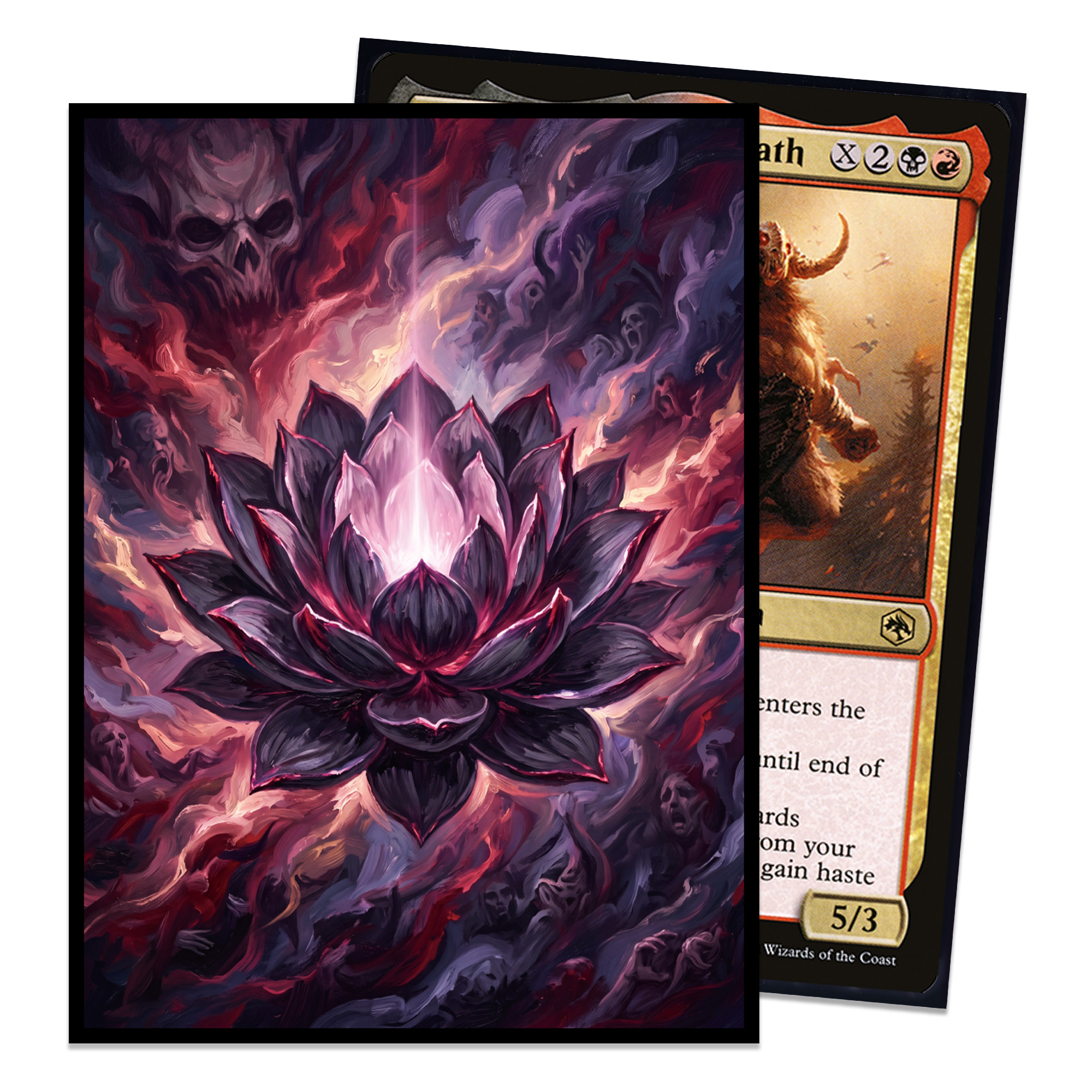
If you plan to shuffle and play with your cards, sleeves are a useful first purchase.
Choose sleeves specifically intended for standard-size MTG cards. Check the product description rather than relying only on a photo or the word “TCG.”
Different sleeve types serve different purposes:
Regular playing sleeves are used around cards you handle and shuffle.
Inner sleeves fit closely around a card and can sit inside compatible playing sleeves.
Toploaders and magnetic holders are rigid storage options rather than sleeves for shuffling a deck.
You do not have to begin with every type. A suitable set of playing sleeves can be a straightforward starting point.
Double sleeving adds another layer but also increases thickness and preparation time. If you want to try it, test a compatible inner-and-playing-sleeve combination before preparing the entire deck.
Count the cards you intend to sleeve and allow for a few matching replacements. Pack quantities vary, so check that you have enough.
A deck box keeps the cards you play together in one place. It also makes it easier to distinguish that deck from the cards you are collecting separately.
Choose the box around your completed sleeve setup.
Before buying, check:
Whether the stated capacity refers to unsleeved, single-sleeved, or double-sleeved cards.
Whether tokens need additional space.
Whether any separate card holder needs a dedicated slot.
Whether the box fits comfortably in the bag you use.
A label such as “100-card capacity” needs context. It does not automatically mean the box fits 100 double-sleeved cards plus tokens and accessories.
For a detailed explanation, read our deck box capacity guide for double-sleeved cards.
When you receive the box, check both directions: the deck should go in comfortably and come out without pulling hard on the sleeves. The lid should close normally.
You may be interested in Magic as a game, a Star Trek collection, or both.
Those interests can share a collection without sharing the same storage space.
If you enjoy browsing favorite characters or artwork, a binder with compatible pockets may be useful. If you prefer displaying a small selection, consider holders designed for those cards and an appropriate place to keep them.
Check holder and pocket dimensions before buying. Do not assume a regular binder pocket will accommodate a rigid holder.
A favorite card does not have to be rare or expensive to deserve its own place. Organize around what matters to you, whether that is a character, a scene, or a card you enjoyed playing.
Keep cards you remove from a playable deck clearly marked so you remember to replace them before the next game.
Opening more cards can quickly turn one neat stack into several mystery piles.
Give new arrivals a temporary home: one labeled section for cards you have not yet decided how to use.
When you sort that section, ask:
Does this card belong in my current deck?
Do I want to keep it in my personal collection?
Is it a duplicate or a card to revisit later?
You do not need to understand every card immediately. A simple temporary category gives you time to learn without losing track of what you own.
Start with a small, suitable container and clear labels. Move to a larger divided box when the current setup becomes difficult to use—not simply because larger storage exists.
It is easy to see a beautifully organized collection online and assume you need the entire setup immediately.
Instead, add accessories when you can name the task they will help with.
| What you notice | What may help |
|---|---|
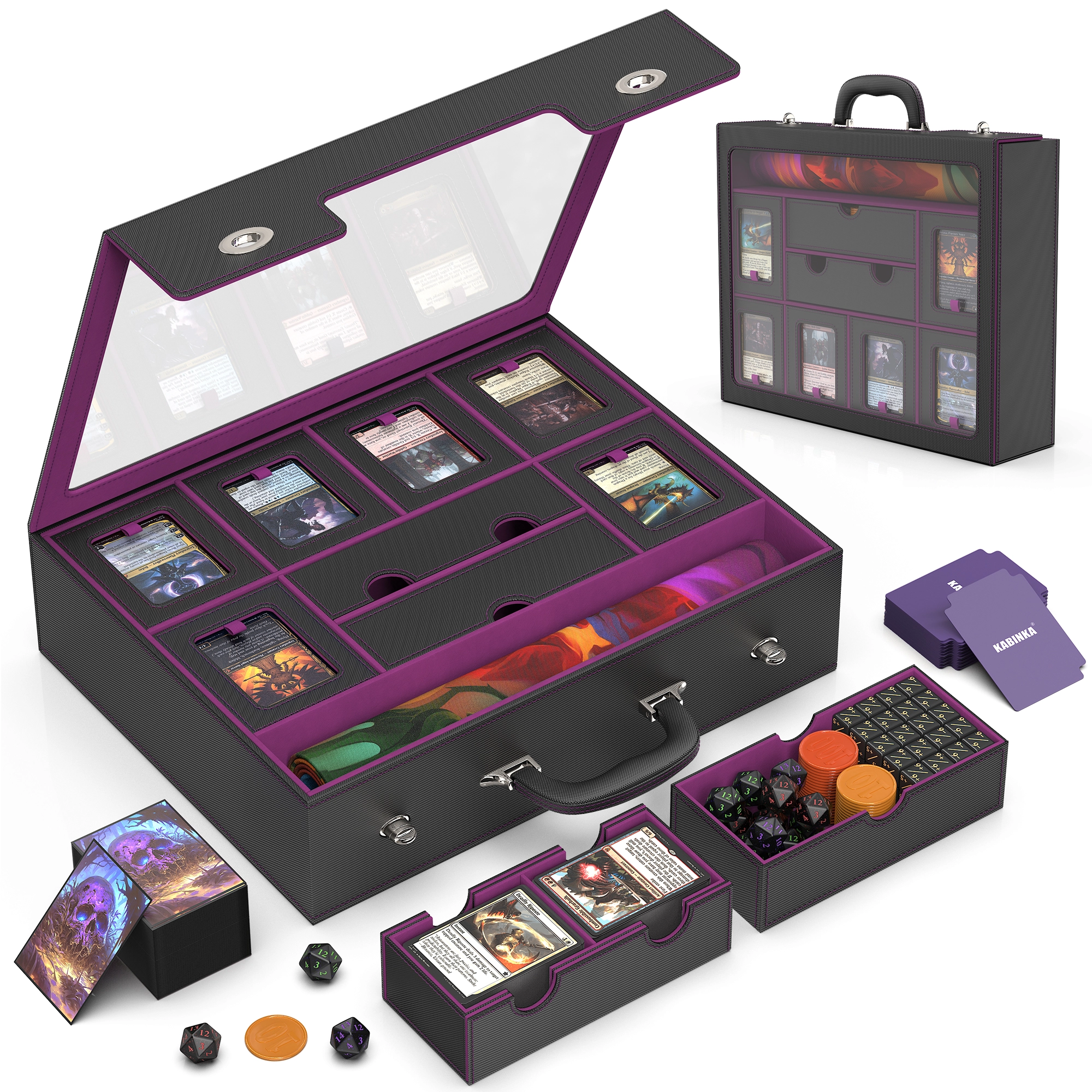
| You regularly bring several decks | A multi-deck or modular case |
| Tokens keep getting mixed into your deck | A separate token section or suitable divider |
| You want to browse favorite cards | A compatible card binder |
| Loose cards are becoming hard to find | A divided storage box with labels |
| You carry dice and counters | A separate pouch or accessory tray |
A compact setup that you understand is more useful than a large system you have not decided how to use.
Before your next session, check that you have:
Sleeves that fit the cards you plan to play.
Enough matching sleeves for the deck.
A box that fits the sleeved cards comfortably.
A separate place for tokens and reference cards.
A labeled section for cards outside the deck.
A suitable place for the favorites you want to browse or display.
If you are carrying dice or other small accessories, keep them separate from the cards rather than loose inside the deck compartment.
For more help choosing a box, read How to Choose a Deck Box for Your MTG Commander Deck.
Choose sleeves according to the card dimensions, not the crossover theme. For standard-size Magic cards, look for sleeves identified as compatible with MTG. Check any unusual inserts separately.
Not necessarily. If you mainly want to play one deck, start with sleeves and suitable deck storage. Add a binder if browsing or collecting individual cards becomes part of the hobby for you.
You can keep packaging you enjoy, but assess its practical fit separately. Check whether it accommodates your sleeved cards, closes securely, and supports the cards during normal use.
Organize around the characters or themes you enjoy. A binder or suitable display holders may be more useful to you than a multi-deck carrying case.
Your first storage setup does not need to account for every collection you might own someday.
Protect the cards you play, give your favorites a clear place, and keep the remaining cards organized enough to find again. As you learn what you enjoy, your storage can grow with you.
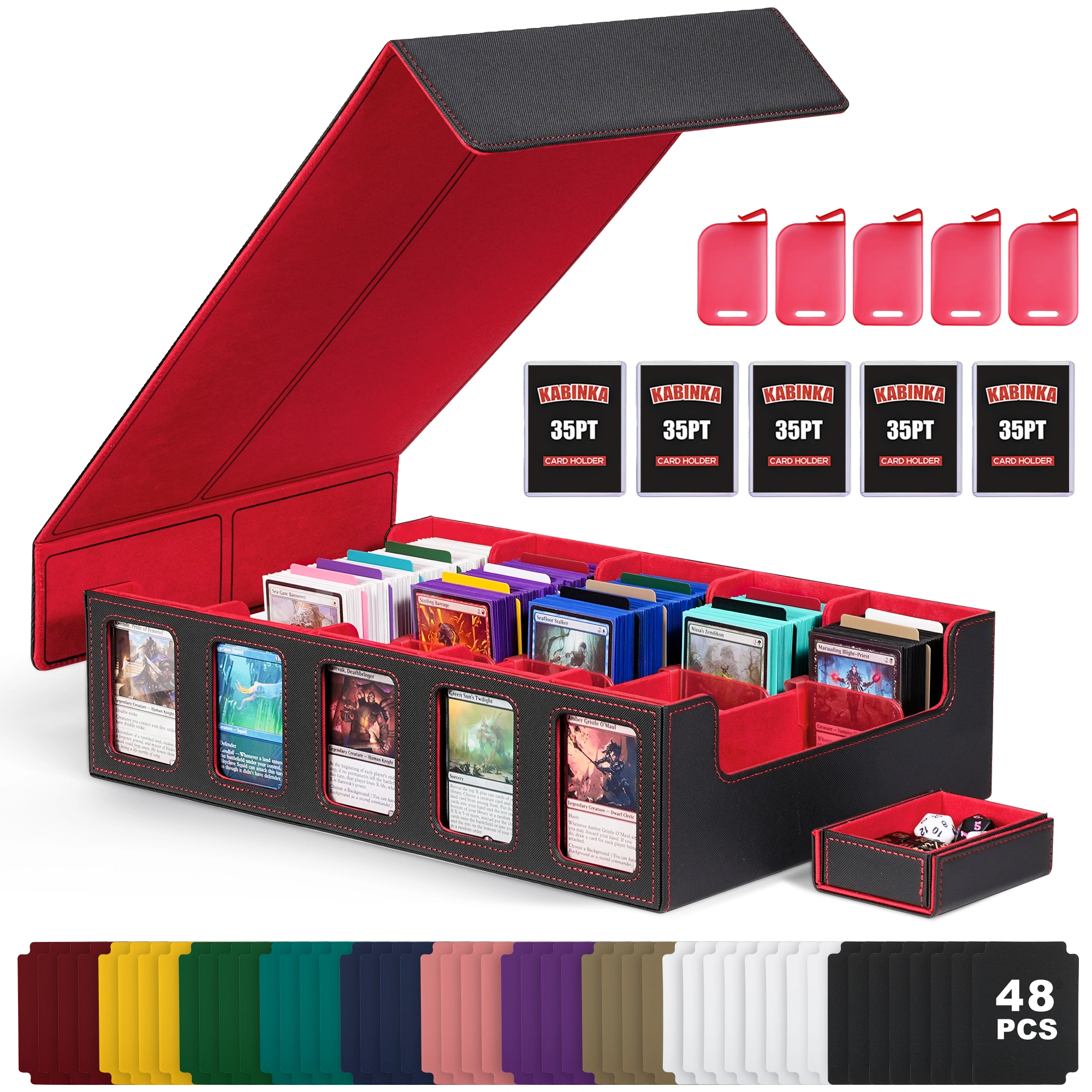
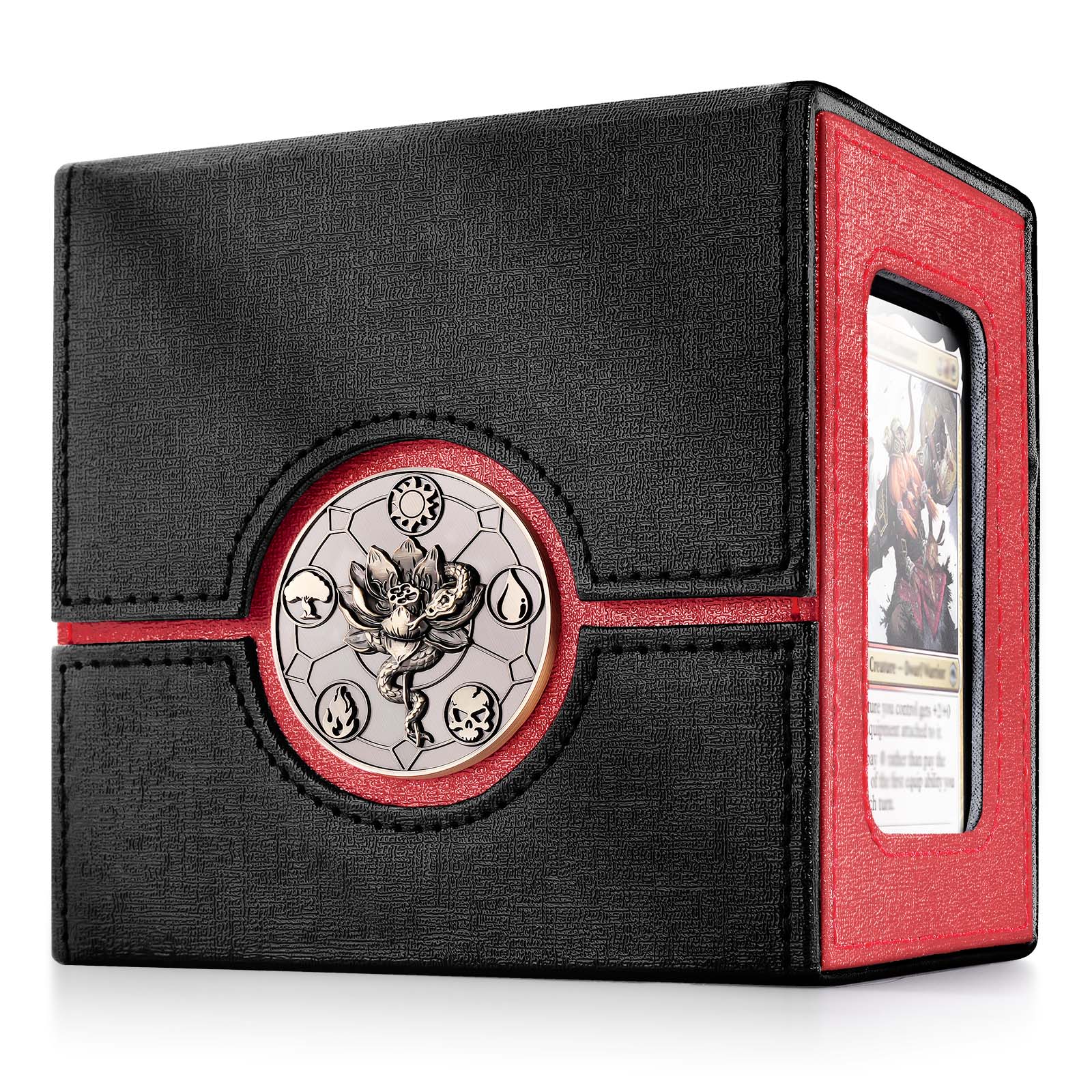
Explore Kabinka deck boxes to compare options for your first playable deck. Check each model’s sleeve capacity, dimensions, and accessory layout before choosing.
Copyright Shenzhen Rushidao Technology Co., Ltd. All Rights Reserved. POWERED BY UEESHOP


